
RESEARCH
What is Propolis?
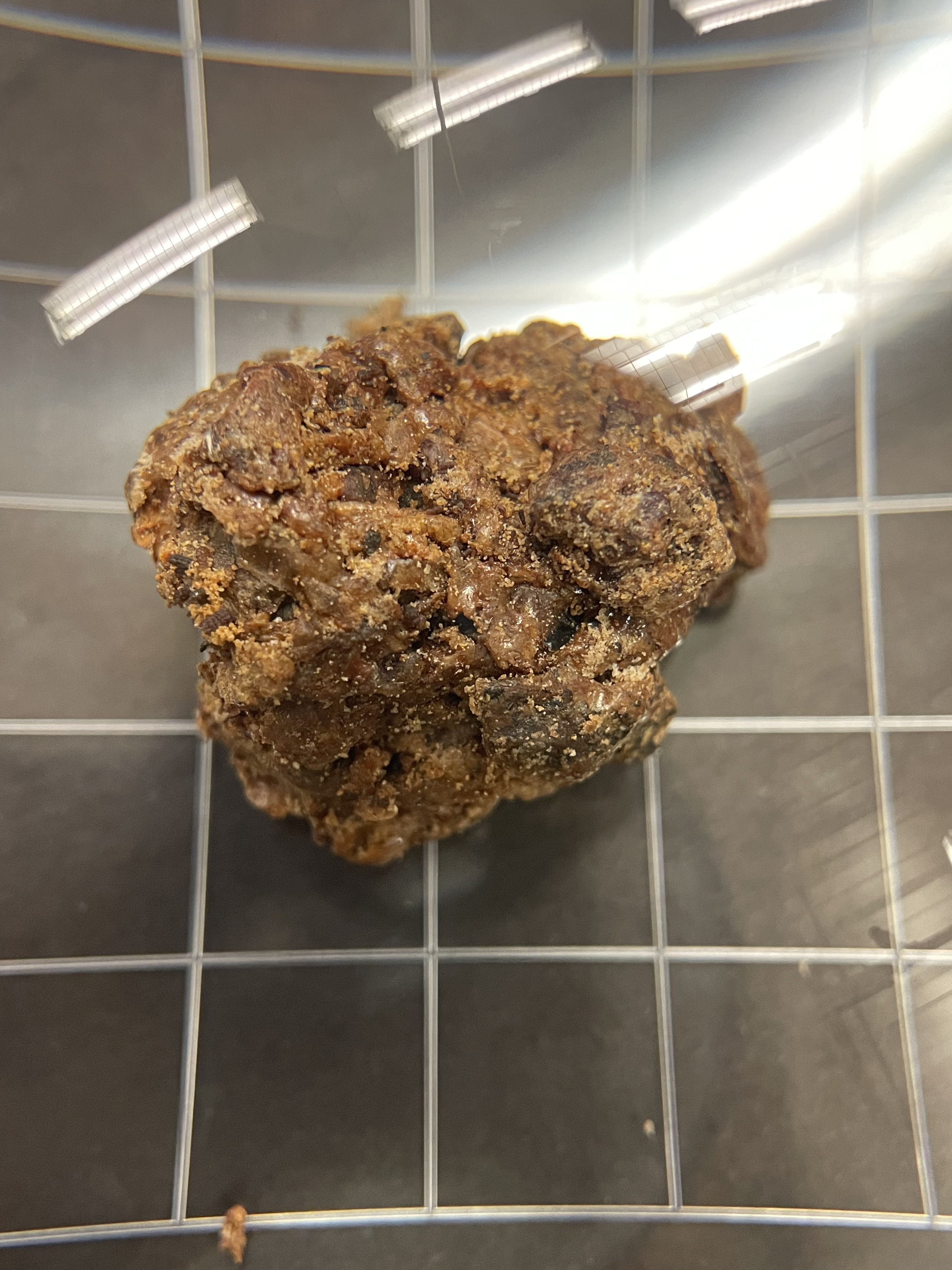
A sticky resinous substance bees collect from tree buds and bark, then mix with beeswax and enzymes to create a natural "glue" used to seal and protect the hive.
Chemically, it's a complex mix of resins (~50%), waxes (~30%), essential oils (~10%), pollen (~5%), and other organic compounds like flavonoids and phenolic acids. The exact makeup varies by region.
Worker bees chew and process raw plant resin with their mandibles, blending in saliva enzymes along the way.
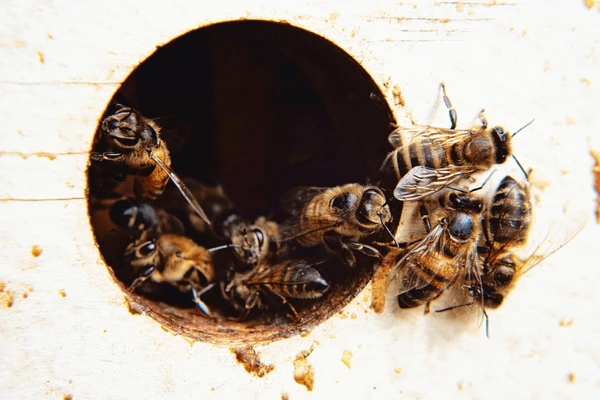
Back at the hive, other bees help unload and apply it to filling cracks, coating the entrance, and even mummifying intruders too large to remove.
In this project we are using the process of collecting and making propolis as way to test the abilities of humans against a social organism.
Bee Sociobiology
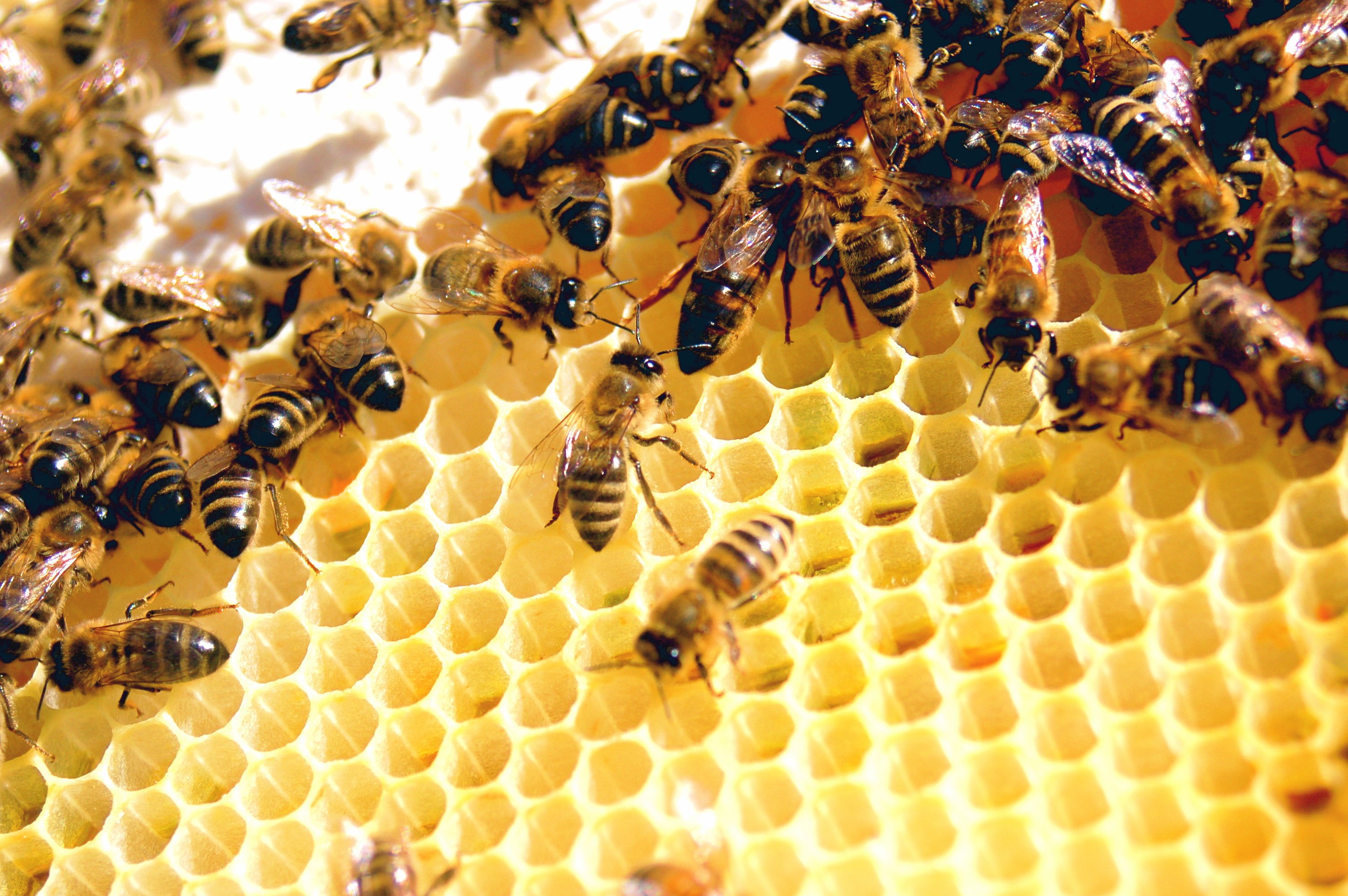
Bee societies operate as highly organized networks where individuals are connected, stable in their roles, and tolerant, all of which are key conditions to drive collective intelligence. Rather than reliance on a single bee, a colony’s social structure shapes how information flows, decisions are made, and tasks are coordinated.
Strong social cohesion allows bees to efficienctly share information about resources, while social stability supports that long-term specicialization (i.e. forgagers, guards, worker bees, etc.)
High social tolerance between the organisms reduce conflict and enables close interaction, which improves learning and coordination across the colony.
Production of propolis is unqiue as it is requires the collective effort of many bees; foraging, processing, and material deposit is guided by shared information and collective needs.
Feedback loops between individual behavior and the colony’s social network refine this process, allowing the have to adapt as a unified system.
For bees, the colony is the unified organism, and all processes are highly concentrated and intentionally designed to benefit the survival of the colony moving forward.

Conversations with Experts
Carlos Silveira,BDC Mentor and Designer
Silveira pushed the project to confront the gap between human systems and biological intelligence. Rather than trying to match the efficiency of bees, he framed the work as an exercise in humility, using human limitations as a core driver of the narrative.
Insights
- Humans cannot replicate biological efficiency.
- Working with only the body and natural resources creates a constraint.
- Project does not act as proof of “success” but of inefficiency.
- Language shift to “human-made ingredients”
- The value lies in comparison: bee propolis vs. human attempts.
- Standardize testing conditions.
Brad Hakes, Designer
Brad grounded the project in biological research; a deeper investigation into propolis as an ecological material and a system. His input expanded the project into questions of immunity and experimental rigor.
Insights
- Propolis functions as more than a structural material; it represents colony-level immunity.
- Investigate whether bee-specific processes are essential to effectiveness.
- Map and visualize how bees collect and process resources.
George Hegeman, Retired Microbiologist and Beekeeper
George introduced a systemic perspective, encouraging the project to go beyond material and toward the process of propolis. His input framed propolis as a part of a broader set of environmental and collective interactions.
Insights
- Consider propolis as a process.
- Consider environmental dynamics (i.e. temperature and resource availability).
- Introduction of systems concepts like flow, distribution, and regulation into the project.
HOW MIGHT HUMANS REPLICATE BEE-DRIVEN
BIO-PRODUCTS TO UNDERSTAND THE GAP BETWEEN HUMAN SYSTEMS AND BIOLOGICAL INTELLIGENCE?
Jake S. Brooker, Edwin J. C. van Leeuwen, Zanna Clay; Social structure as a form of collective intelligence: a new framework. Philos Trans R Soc Lond B Biol Sci 17 April 2026; 381 (1948): 20240443. https://doi.org/10.1098/rstb.2024.0443
Bee Vital Propolis. (2021, October 6). What is propolis?. 17 April 2026. https://beevitalpropolis.com/blogs/news/what-is-propolis?utm_source=chatgpt.com
HIVE
RESEARCH
EXPERIMENTS
BUZZING FORWARD
ABOUT US